


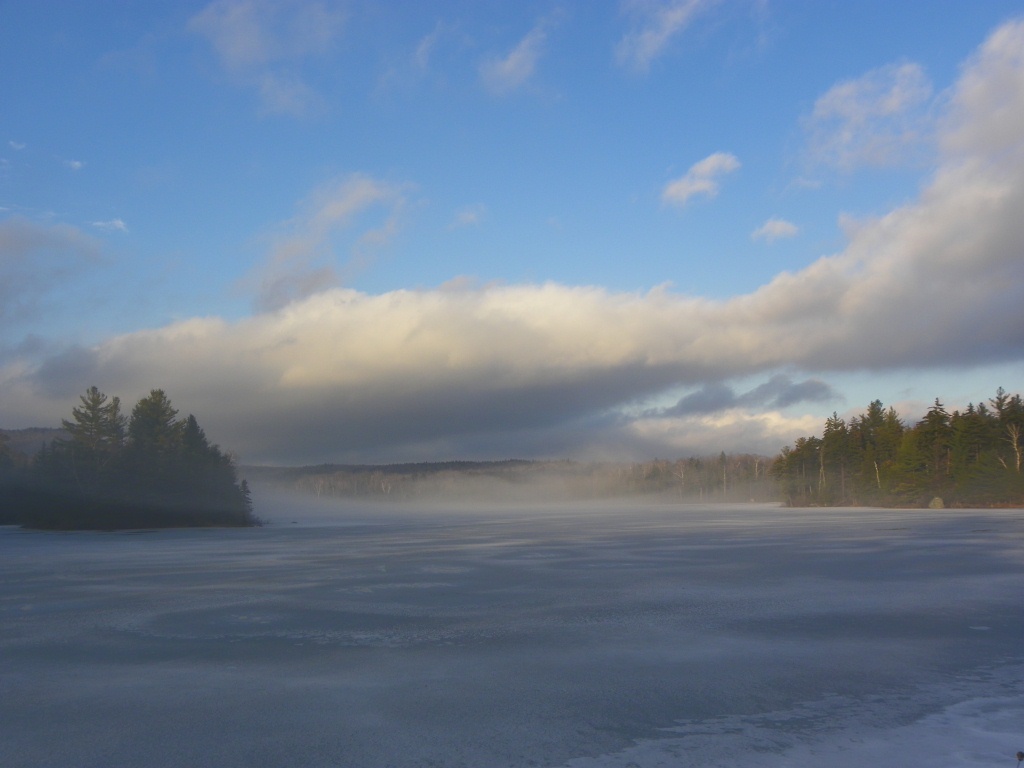

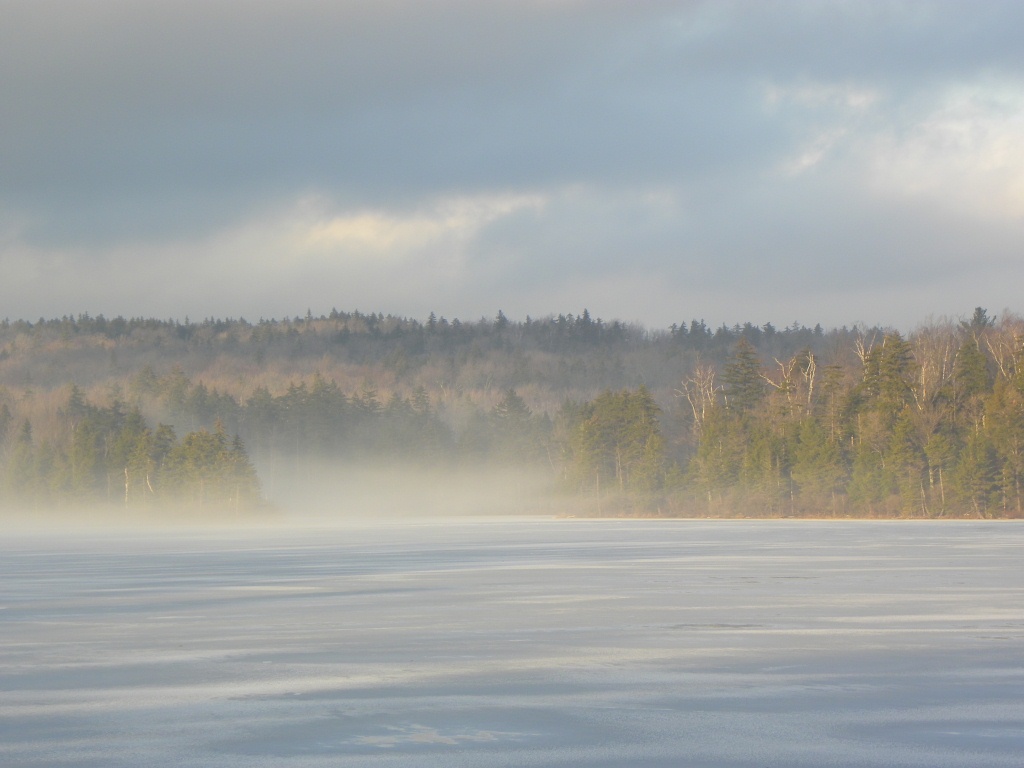
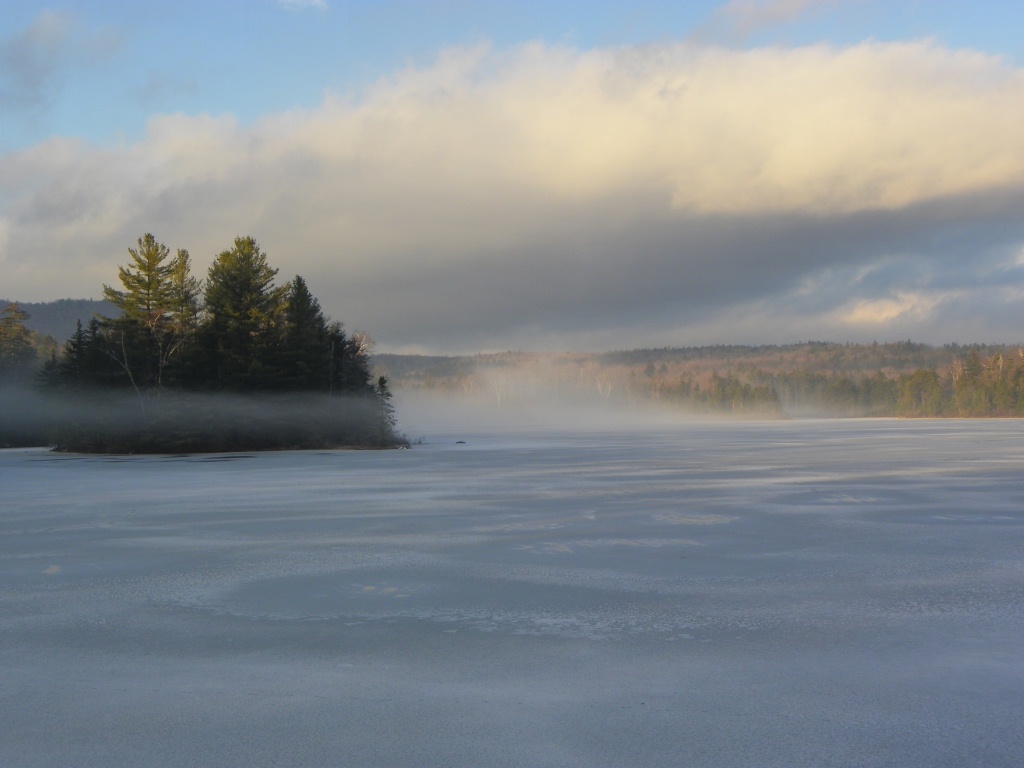

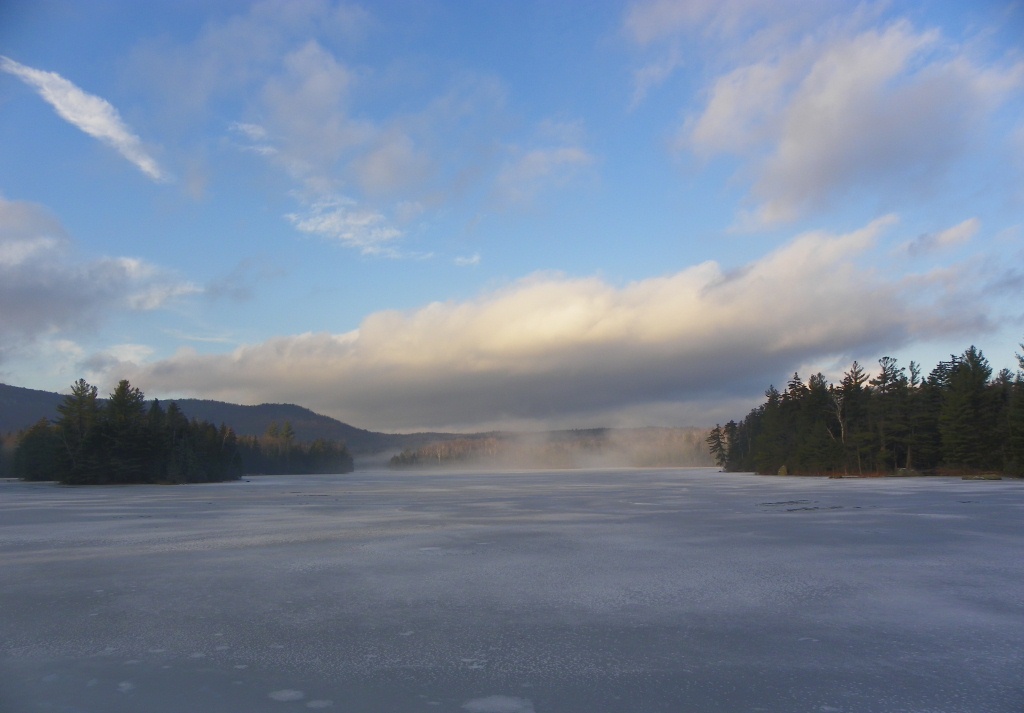


As if on cue, rain started to fall shortly after I began writing A Pause in the Wobble the other day. As I wrote, the ice went from being hard, like thick glass, to something softer and more pliable, like plastic, as a giant puddle formed across its surface.
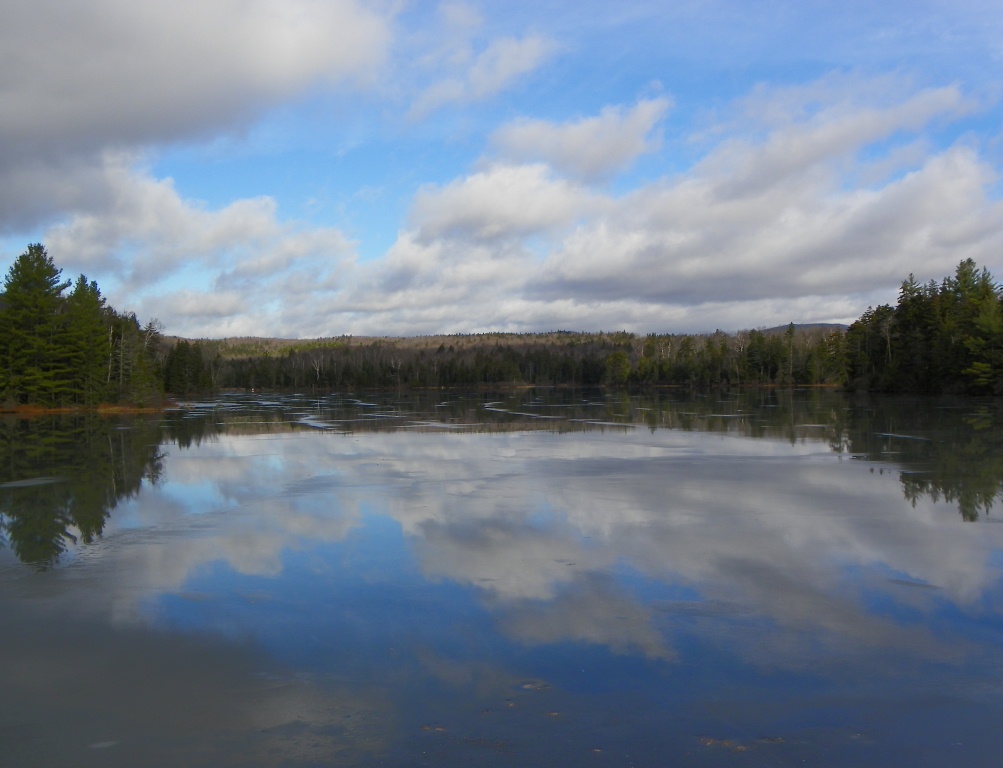
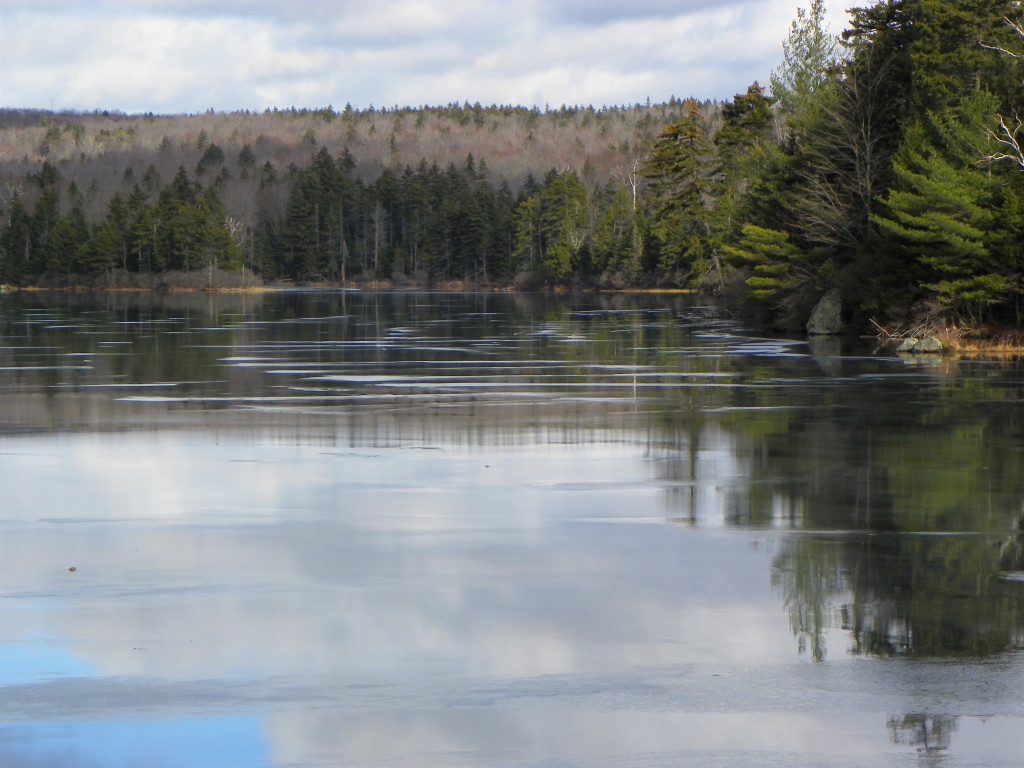
The rain that fell could only spread out across the level sheet and the mild air kept it from freezing, creating a lake on top of a lake.
(True story: I once had to transport a queen-size bed halfway across the state of Vermont and then across a mile and a half of ice on Lake Champlain. Used a pickup truck and, of course, it rained. It rained a lot. It rained so much there was six inches of water standing on the ice when we got there so I walked the entire way, slipping and splashing, looking for holes, while Mrs. Gordon and her brother followed slowly in the truck, doors open and seat belts off, just in case. Kind of like Ice Road Truckers, but with a lot more screaming. Mrs. Gordon was a little upset, too.)
The images above are just not what one would expect to see in Vermont a few days before Christmas, but as quickly as things changed the other night, they changed again last night and these are some pictures I took when I went out this morning: Continue reading
Back in the beaver ponds the ice is flat and sometimes the water level drops before it can freeze all the way across.


Most years we don’t get to see the ice like this. Most years we have snow and it’s all covered up. Continue reading
There are swamps and bogs and all sorts of wet spots full of mosses and ferns around Fish in a Barrel Pond. Appearing lush and green, these areas are actually highly acidic and lacking in nutrients; very challenging places to live if you are a plant. The plants that thrive here in spite of it all are able to do so because they posess special traits, and some are even able to extract nutrients from insects they capture.
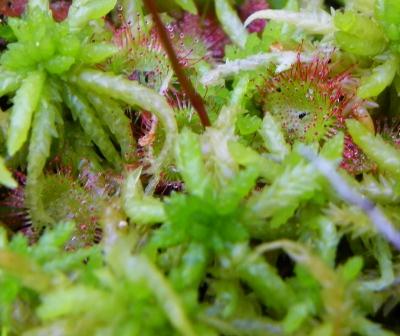
I have seen pitcher plants, deep in the bogs of Maine, and I have seen Venus flytraps in plastic cups on the counter at the local garden center but until last week I had never seen a sundew. Insects are attracted by a sweet scent and become trapped on sticky hairs on the sundew’s leaves. The leaves then slowly curl around the prey, enzymes digest the meal, and the sundew gets what it needs to live, bloom and set seed.
On a recent walk with our consulting foresters, I asked if there might be sundews growing nearby and within ten minutes they found several clusters, growing in the peat. I must admit I somehow expected something a little more carnivorous looking…

but it’s still cool to see something I had never seen before:
Round Leaf Sundew (Drosera rotundifolia)



Quill Gordon was actually let loose for a day last week and took a little road trip to Manchester, Vermont.
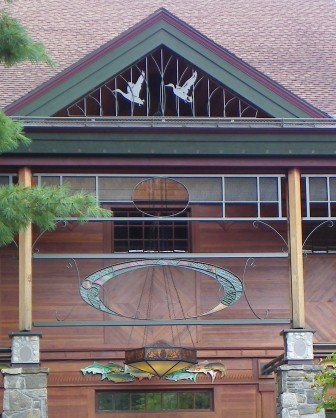
Orvis


One dozen flies and two marked-down leaders are all I was talked into this day, but shopping was not why I drove over the mountain to Manchester. Continue reading
(A photo prompt from the Outdoor Blogger Network: The photo least likely to be framed and hung on the wall.)
I click the shutter button a lot and, most of the time, my pictures look pretty good.
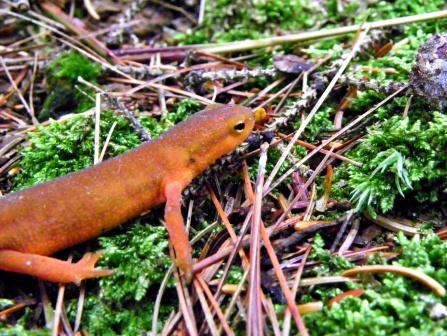
A Newt
Sometimes I will review the contents of my camera’s memory card and come across a shot that makes me wonder just what the heck was going on when I took it.
Huh?
Sometimes I will take a picture because of the unique point of view or to look at something from an unusual or uncommon angle, figuring “well, as long as I’m down here …”

I've Fallen and I Can't Get Up!
Photography has come a long way since I started taking pictures with that old Kodak Instamatic and those throw-away flash cubes. I have done my best to keep up with the latest advances and have fully embraced digital technology to take, sort, edit and share my photos but I’m telling you, if I live to be a hundred and ten, I don’t think I will ever get the hang of taking pictures with a phone.
I Can't Talk and Take Pictures at the Same Time
 The View from Fish in a Barrel Pond