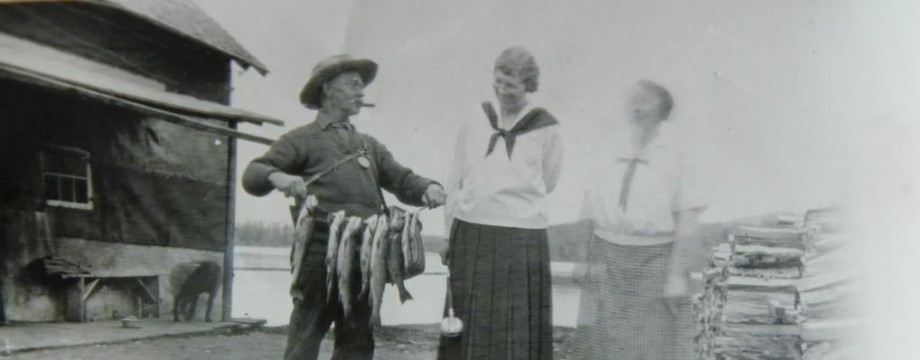
When word got out, a couple of weeks ago, that I was going to make the 30 mile drive to the closest thing we’ve got to a city around here, my friend Eugene jumped at the chance to tag along. He must have jumped, although he could have dropped from a tree for all I know, into the bed of my truck just past Peavy Flat, where the road narrows and you have to slow down so as to not run over Purly Coutermarche’s dogs. By the time I noticed him back there it was too late to turn around and take him home so I agreed he could come, but because I didn’t want to get a ticket for having a passenger in the bed of a truck on the highway I covered him with a tarp and told him to stay out of sight. Continue reading
Vermont
Looking for Trouble
So there I was, sitting on the dam with a cup of coffee, watching the ice melt and searching for signs of spring when I saw something swimming in the open water along the west shore. It ducked beneath the ice before I could focus on it but a moment later it surfaced less than 20 feet away and I could see it was a young beaver, striking out on its own, looking for a place to set up shop.
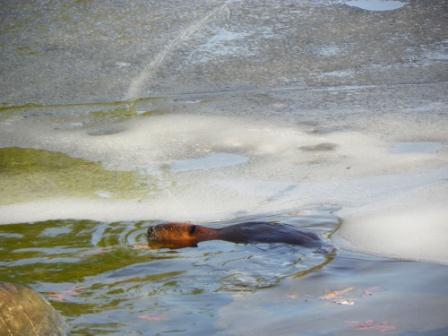
I watched as it followed the shoreline, working its way through the ice floes and, as it swam along the east shore of Fish in a Barrel Pond, I had a feeling I knew exactly where it was headed. My suspicions were confirmed the next morning.
Last spring, with some help from the state, I installed a “beaver baffle” in a dam along one of the roads I maintain. You can read about it HERE. The baffle allows water to flow through the beaver dam and the theory is that the beavers will never figure out that they are losing water through the large pipe twenty feet back from the dam. It worked well and the water level stayed where I wanted it but then the resident beavers got ambitious and began expanding their empire into territory strictly off-limits to beavers. If only they had stayed where they were.
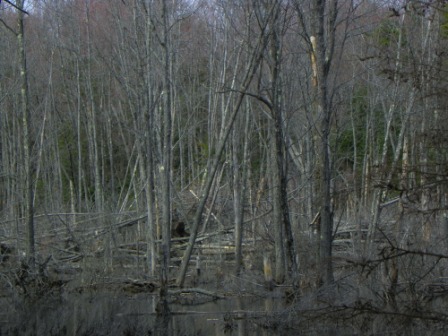
Their removal worked out pretty well for this new, young beaver. He (we’re assuming it’s a he) turned the corner, followed the outlet of the pond and wound up in what must seem to be a beaver paradise. The little guy doesn’t have to do a thing! There’s already a dam in place, an abandoned lodge, and there are several stashes of food his predecessors never got back to. What luck!
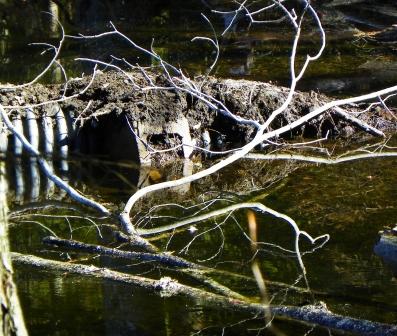
The thing about beavers, though, is that they can’t just sit there and enjoy what they have. They must work, work, work, and this particular beaver is no exception. It didn’t take him long to start “improving” what he’d found. Scooping, digging and pushing, he has undertaken an expansion of the dam which, with the baffle in place, would normally not be a problem.
Normally.

I won’t say he’s any smarter than any other beaver. Maybe another beaver would do the same thing, blindly doing what comes naturally. Maybe another beaver would lift a twelve inch pipe (full of water, no less!) up out of the muck and pack debris underneath. Maybe another beaver would shove a four foot wide cage made of stock fence from its place, even moving cinder blocks with it. Maybe another beaver would try to add a six foot culvert pipe just downstream to his holdings. I just don’t know what another beaver would do but this one is starting to make me mad.
Categories: nature, Rural Life, Vermont
Tags: beaver, beaver baffle, beaver dam, beaver pond, beaver problems, ghoti62, quill gordon, Rural Life, Vermont
1 Comment
Another Season
Four seasons aren’t enough to fully define a year in Vermont. We divide the four main season into shorter “sub-seasons”, not only to recognize subtleties and nuances that deserve attention but also, I think, to keep any one of them from seeming to be an endless slog.
Some of these “sub-seasons” are simply the in-between stages as one season gives way to another. After the leaves are off the trees and the tourists have gone home, the hillsides are bare and some guys call the period before the first snow “stick season”. “Black fly season” is endured as spring transitions to summer, following close on the heels of “mud season” which marks the change from winter to spring.

It is now mud season. Continue reading
Categories: Rural Life, Vermont
Tags: ghoti62, mud season, Rural Life, snow, spring, Vermont, winter
Leave a comment
The Snow Flea and the Furcula
Without a doubt, the most common search term to bring people to this blog is “poop”. It could be due to the highly ranked photo of bear poop found in my post “Running Man” or perhaps it relates to the action in my post “Careful with that Axe, Eugene“. I don’t know.
In second place, behind the aforementioned “poop”, would be any number of variations having to do with Phineas Gage, the man who had an iron rod blown through his head over on the other side of Cavendish. His story is fascinating and instructive (before tamping blasting powder, always, always, always make sure to have a good layer of sand between the powder and your tamping iron) but it has been told countless times by others.
The third most common search term to appear on my statistics page is “Snow Fleas” and refers to a post from a few seasons ago. Quite often these searches include the words “how to kill”. Well, I could write about poop all day and someday probably will. I might even get around to posting a little something about Phineas Gage and the time he spent working for Phineas Barnum but right now I need to know why people want to kill Snow Fleas.

Snow Fleas (Achorutes nivicolus) are not Fleas at all. They belong to the insect family Poduridae and are generally found on the forest floor,sometimes appearing in great numbers on top of the snow on warm winter days. On the coldest of days they go dormant, thanks to a chemical in their blood that acts as an antifreeze, but as temperatures climb they become more active and begin feeding. Voracious by nature, they swarm, searching for food, hungrily consuming everything they find as long as it is a small, partially decomposed bit of tree bark or leaf. Big stuff gets broken down into small stuff, it’s the way of the world, and snow fleas are an important part of that process, making and enriching soil one tiny meal at a time.

When the snow in the woods looks like it’s been sprinkled with pepper, and those pepper flakes move, chances are good you’ve come across a cluster of Snow Fleas, just doing their jobs, turning tiny bits of organic matter into smaller bits of organic matter. There is no need to search for ways to kill them.

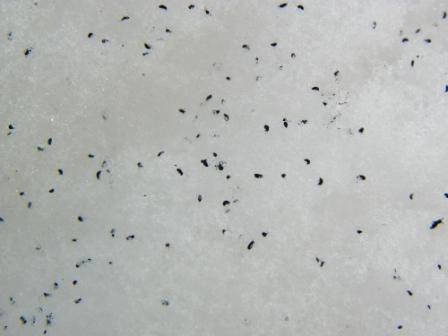
The “Flea” in their name is unfortunate. They and their close relatives are also known as Springtails, which is much more descriptive, because of an appendage, resembling a tail, that, well, acts like a spring. Called a furcula, this appendage folds up, under the abdomen, and locks into place much like the bar on a mouse trap. The Springtail holds its furcula under pressure by drawing water into its abdomen in a process known as “sucking water up its butt” and when that pressure is released the furcula springs down, propelling the average Springtail up to 100 times the length of its body. If I were a Snow Flea I could change Olympic history forever but I am not and I guarantee you that, if six-foot tall Snow Fleas began flinging themselves hundreds of yards, crashing through the woods and you needed to kill them, I’d be at the top of your search results.


After The Thaw
The best ice forms when it’s cold. Thus spake Quill Gordon, Chronicler of the Obvious, but we’re not just talking cold here. We’re talking real cold, where boogers freeze and snow squeaks under foot. The kind of cold where an unprotected finger feels like it’s been sliced by a razor and ears like they’ve been set afire. Cold made all the more shocking by following on the heels of a warm January thaw.
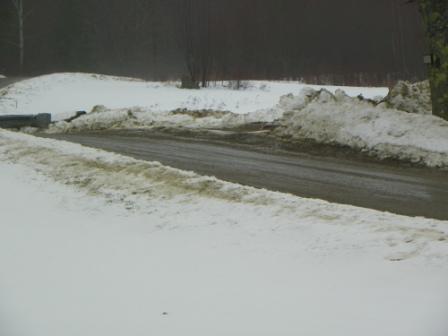
On Monday it was 50 degrees and pouring rain. Today it’s impossible to tell how cold it is — because the thermometer disappeared last night in the wind — and dry arctic air continues to assert its dominance by slamming into everything at 40 miles per hour. Except for wool trousers, which it sails right on through. Continue reading
Categories: nature, Vermont
Tags: ghoti62, ice, january thaw, nature, quill gordon, Vermont, winter
2 Comments
Like Dew, Only Frozen

On mild days, moisture is drawn from the snow pack into the air. Relatively speaking, warm air holds more moisture than cool so as temperatures drop at night some of that moisture is released as condensation. And if the object upon which that moisture condenses has been chilled to below freezing, frost will form on its surface.
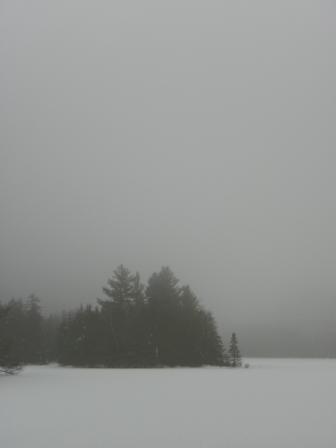
Freezing fog (Beware the Pogonip!) can create frost and has its own eerie beauty but the best examples of frost are seen when the sky is clear and radiational cooling seems to suck the heat out of everything, hurling it out past the stars and into deep space. Delicate filigrees disappear quickly when the warmth of the sun takes over and by the time most people get up the show is over. Continue reading
Categories: nature, Rural Life, Vermont
Tags: frost, ice, january thaw, pogonip, Rural Life, Vermont, winter
Leave a comment
Sadly Mistaken
If I were to describe to you the absolute saddest thing I have ever heard it would break your heart and ruin your week. You’d mope around the house in your slippers and robe, the furnace and your pathetic sighs the only sounds in the house other than silence. Not even I know what describing it would do to me, especially at this point in winter with February still to go, but I can imagine and no one needs to see that. Continue reading
Categories: +The Neverwas Nonesuch Angling Society, Loons, nature, Vermont
Tags: ghoti62, loon call, Loons, nature, quill gordon, Rural Life, Vermont
1 Comment
“You Can’t Get Here From There” or, “Of Ducks and Men”
A friend recently began using one of those fancy GPS units in his car. A marvel of modern technology and engineering, this thing has a sultry female voice that recites the directions to any place he tells it he wants to go. It also has all kinds of nifty features to distract from the task at hand (driving in a safe, responsible manner) as he pushes its little buttons and squints at its tiny screen. It even has a suction cup that allows him to stick it to the inside of his windshield, leaving his hands free for eating, drinking and other important tasks like typing messages with his thumbs. Or finding a place with cell phone coverage so he can call me to help figure out where the heck he is.
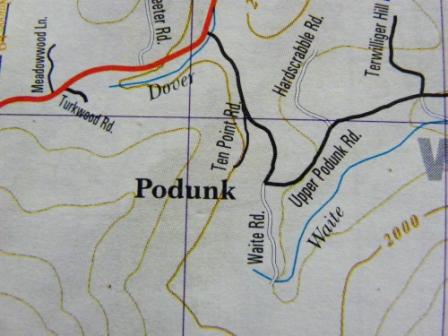
Close-up of an actual Vermont map
I’ve heard it is possible now to get one of these GPS things with the voice of a celebrity to tell you when and where to turn. If I were to get one I would want Sean Connery’s voice, just to hear him say “Podunk, Vermont”. Continue reading
Categories: nature, Rural Life, Vermont
Tags: ghoti62, GPS, nature, navigation, Podunk, quill gordon, scoters, technology, Vermont
2 Comments
The Disappearance of Ethan Allen
My good friend Eugene is shacking up this winter with his pal Purly, at Purly’s place, above the swamp on the far side of Peavey’s Flat. It’s a good arrangement now that they’ve worked out some of the logistics and division of duties. For example, Purly does the cooking now which has significantly reduced the number of grease fires. Eugene does the washing and ironing has done well so far, although he has to mop a lot.
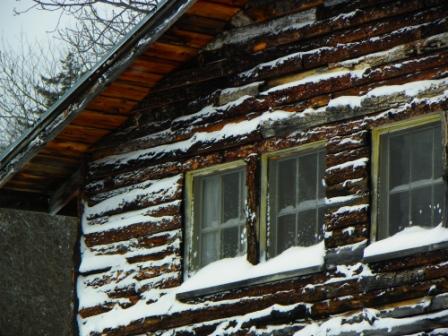
They are trapping beaver, mink and muskrat together again this season, encouraged by the great success last year of their line of Local Organic Hand-Crafted Artisanal ladies’ undergarments that they called “Beaver Fur”. Continue reading
Categories: Humor, Rural Life, Stories About My Good Friend, Eugene, Vermont
Tags: dog stories, dulcimer possum board, Eugene, fiction, Humor, quill gordon, trapping, Vermont
3 Comments
Eskimo Blue Day
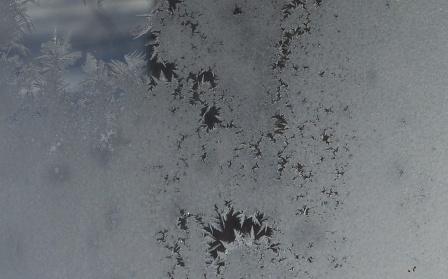
Sometimes when the cold winter wind screams, seeming to carry nothing but cruelty and pain, it can seem like the best thing to do is scream back. Feet planted and shoulders squared, lean in and let loose with a howl, a yowl or a yelp. Play with the tone and vary the pitch, high, low or otherwise, but always, always keep the volume right where it should be, turned up all the way to 11. Continue reading
Categories: nature, Rural Life, Vermont
Tags: death in the woods, ice, nature, quill gordon, Rural Life, snow, Vermont, winter
1 Comment
 The View from Fish in a Barrel Pond